How to Make Vegetable Stock from Kitchen Scraps
Homemade vegetable stock is a good way to use the parts of vegetables that usually go in the trash: onion ends, carrot peels, celery leaves, mushroom stems and herb stems. Save them in a bag in the freezer, and when the bag is full, you have the makings of a pot of stock that costs almost nothing.
Stock made this way varies a little each time depending on what you saved, which is part of its charm. A few guidelines keep it tasting balanced rather than bitter or muddy.
Start a scrap bag
Keep a large zip-top bag or container in the freezer and add clean vegetable trimmings as you cook. Rinse vegetables before trimming so the scraps are clean. Freezing keeps them fresh until you have enough, usually about 4 to 6 cups, which takes a week or two for most households.
Only save scraps that are in good condition. Anything moldy, slimy or past its best will add off flavors to the stock.
What to save and what to skip
- Good choices: onion and leek trimmings (including some skins, which add color), carrot peels and ends, celery ends and leaves, mushroom stems, garlic skins and ends, parsley and thyme stems, fennel fronds, scallion roots, corn cobs, tomato cores.
- Use sparingly: potato peels (can make stock cloudy), bell pepper (strong flavor), beet trimmings (turn it red).
- Skip: cabbage, broccoli, cauliflower and Brussels sprouts (they turn stock sulfurous and bitter), artichokes, eggplant, and anything very starchy or spoiled.
Making the stock
Put the frozen scraps in a large pot. For about 6 cups of scraps, add 10 to 12 cups of cold water, enough to cover by a couple of inches. Add a bay leaf, a few black peppercorns and, if you have them, a handful of fresh parsley. Leave out salt so you can season dishes later.
Bring to a boil, then lower the heat and simmer gently, uncovered or partially covered, for 45 minutes to 1 hour. Longer simmering does not improve vegetable stock and can make it taste stewed or bitter.
Straining and cooling
Set a fine-mesh strainer over a large bowl and pour the stock through it. Press lightly on the vegetables to extract the liquid, but do not mash them, which clouds the stock. Compost the solids if you can.
Cool the stock quickly. Divide it into smaller containers or set the bowl in a sink of cold water and stir. Refrigerate within two hours of cooking.
Boosting the flavor
For a richer, darker stock, roast the scraps on a baking sheet at 425°F (220°C) for 25 to 30 minutes before simmering. A tablespoon of tomato paste, a strip of kombu or a few dried mushrooms add savory depth. Adding a whole fresh onion, carrot and celery stalk to the scraps also gives a more reliable base flavor.
Common problems
If your stock tastes bitter, it probably contained brassicas such as cabbage or broccoli, too many onion skins, or simmered for too long. If it tastes weak, use more scraps relative to water, or simmer the strained stock uncovered for 15 to 20 minutes to concentrate it. Cloudy stock is perfectly fine to use; it happens when the stock boils hard or the vegetables are pressed too firmly when straining.
Storage
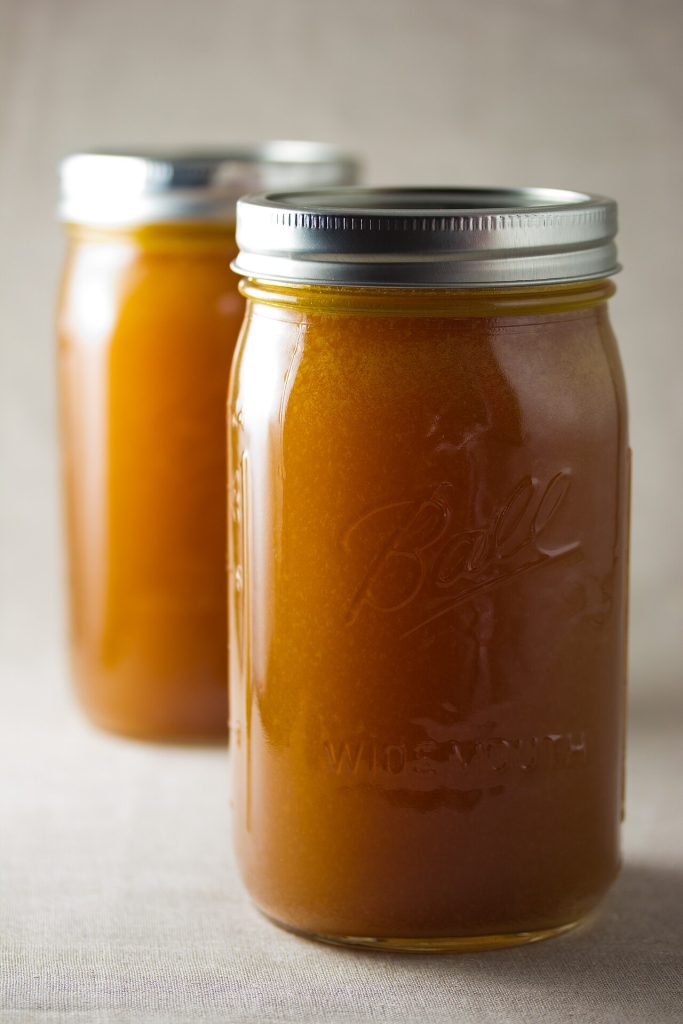
Vegetable stock keeps in the refrigerator for up to 5 days and in the freezer for up to 6 months. Freeze it in 1- or 2-cup portions so you can thaw only what you need. Silicone muffin trays or ice cube trays make small portions for deglazing a pan or cooking grains. Leave room at the top of jars for the liquid to expand.
Use your stock in soups, risotto, braised beans and grains, or anywhere a recipe calls for broth. Because it is unsalted, season the finished dish to taste.
This guide is general kitchen information, not food-safety certification or medical advice. See our Disclaimer and Image Credits.