How to Cook Pasta Properly: Water, Salt, Timing and Sauce
Cooking pasta seems too simple to need instructions, but a few small habits make the difference between a sticky, bland bowl and pasta that tastes seasoned and holds its sauce. None of them require special equipment.
This guide covers dried pasta, the kind most of us keep in the cupboard. Fresh egg pasta follows the same principles but cooks in a fraction of the time.
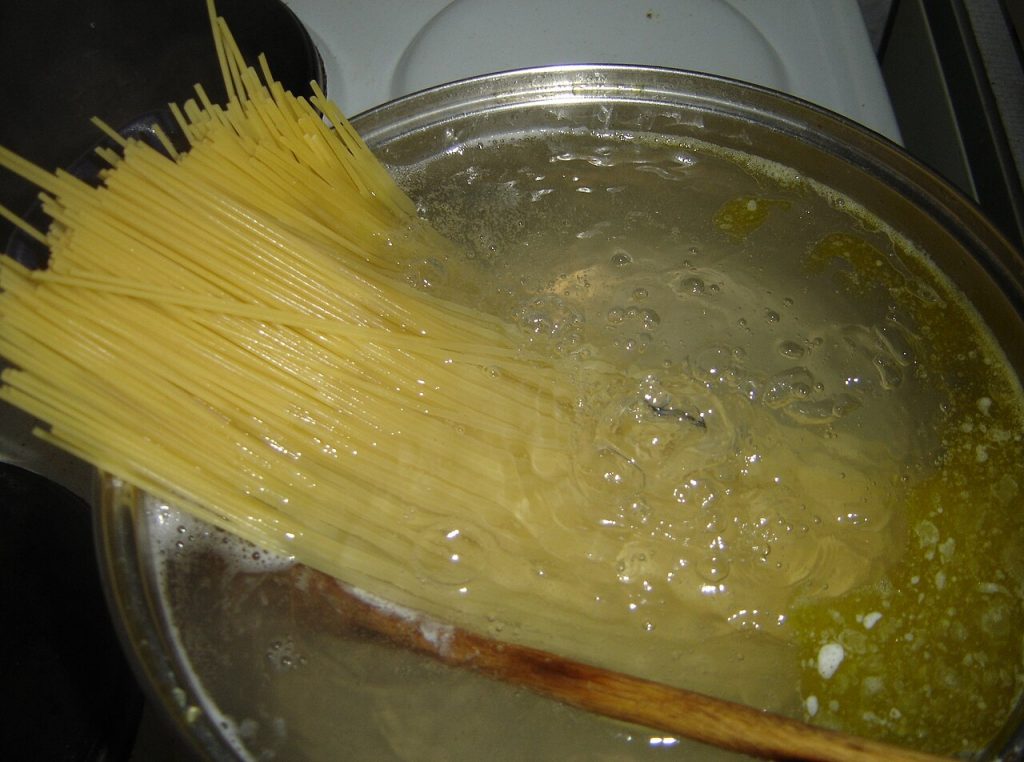
Use a big pot and plenty of water
A good rule is about 4 quarts (4 liters) of water for each pound (450 g) of pasta. Plenty of water returns to the boil faster after the pasta goes in and gives the pieces room to move, so they cook evenly and stick less.
You can use less water for short shapes if you stir often, and some cooks deliberately do so to get starchier cooking water. For long shapes like spaghetti, a wide pot that lets them lie flat helps.
Salt the water generously
Pasta absorbs water as it cooks, and that water is its only chance to be seasoned from the inside. Add salt once the water is boiling: about 1 to 1 1/2 tablespoons of kosher salt (or 2 to 3 teaspoons of fine salt) per 4 quarts. The water should taste pleasantly seasoned, not like the sea.
Oil in the water does not stop sticking; it mostly floats on top. Stirring in the first two minutes, when the starch on the surface is gummy, is what prevents clumps.
Start timing at the boil, and test early
Drop the pasta in only when the water is at a full rolling boil, stir, and cover briefly until it returns to the boil. Then uncover and keep it at a lively simmer.
Package times are a guide. Start tasting two minutes before the earliest time given. Al dente pasta is tender but still has a slight firmness at the center when you bite it; a tiny white dot in the middle of a cut piece is normal. If the pasta will finish cooking in a sauce, drain it a minute early.
Save a mug of cooking water
Before draining, scoop out about a cup of the cloudy cooking water. It contains starch released by the pasta, and a few spoonfuls added to the sauce help it cling and turn glossy instead of oily or watery. It is the secret behind restaurant-style pasta dishes made with just butter, oil or cheese.
Finish the pasta in the sauce
Drain the pasta (do not rinse it unless you are making a cold pasta salad) and add it straight to the pan of warm sauce. Toss over medium heat for a minute or two with a splash of the reserved water until the sauce coats every piece. The pasta absorbs some of the sauce and the two become one dish rather than sauce sitting on top.
- Thick, chunky sauces: short tubes and shells.
- Smooth tomato or oil-based sauces: spaghetti and linguine.
- Rich, creamy sauces: wide ribbons such as fettuccine.
Whole-wheat and legume pastas
Whole-wheat pasta has a nuttier flavor and firmer bite; it pairs well with robust sauces such as roasted vegetables or tomato and greens. It can go from firm to soft quickly, so taste often. Chickpea and lentil pastas foam more and turn mushy if overcooked; use a large pot, skim the foam and test a minute or two before the package time.
Cooking pasta ahead
For meal prep, cook pasta a minute short, drain, toss with a little olive oil, cool quickly and refrigerate for up to 4 days. To reheat, dip it in boiling water for 30 seconds or warm it in the sauce. Storing pasta separately from soups and sauces keeps it from going soft.
Common mistakes to avoid
- Breaking spaghetti to fit the pot: instead, stand it in the water and push it down gently as it softens.
- Rinsing hot pasta: this washes away the starch that helps the sauce cling.
- Draining it too early and letting it sit: drained pasta sticks together as it cools, so have the sauce ready first.
- Drowning it in sauce: start with less sauce than you think and add more as you toss.
Once these habits become automatic, every pasta recipe on this site will turn out better. Try them with our roasted tomato pasta sauce or minestrone.
This guide is general kitchen information, not food-safety certification or medical advice. See our Disclaimer and Image Credits.