How to Make a Basic Vinaigrette (and Ten Ways to Change It)
A homemade vinaigrette takes about two minutes, costs very little and tastes far fresher than most bottled dressings. Once you understand the basic ratio, you will never need a recipe again: you can change the vinegar, the oil, the herbs and the sweetener to suit any salad, grain bowl or plate of roasted vegetables.
This guide covers the classic ratio, how to make the dressing stay blended, which oils and acids to use, and a list of easy variations. The video shows a fresh salad being dressed with a fruit vinaigrette, one of the variations below.
What you need
- Oil: extra-virgin olive oil or a neutral oil such as avocado or sunflower
- Acid: wine vinegar, cider vinegar, balsamic, rice vinegar or fresh citrus juice
- An emulsifier: Dijon mustard, honey, miso, tahini or a little mayonnaise
- Salt and freshly ground black pepper
- Optional: a minced shallot or garlic clove, fresh or dried herbs
- A small jar with a tight lid, or a bowl and a whisk
The basic ratio
The classic proportion is three parts oil to one part acid. For a single large salad, that means about three tablespoons of oil and one tablespoon of vinegar, plus a teaspoon of mustard, a pinch of salt and a few grinds of pepper. This ratio gives a balanced dressing that coats the leaves without tasting harsh.
Treat it as a starting point. Many cooks prefer a sharper dressing closer to two parts oil to one part acid, especially with bitter greens or rich ingredients like cheese and nuts. Mild acids such as rice vinegar or orange juice can be used in larger amounts. Always taste the dressing on a leaf of the salad you are serving, not from the spoon, because the greens soften the flavor.
Step 1: Season the acid
Put the vinegar or citrus juice in the jar or bowl and add the salt, pepper, mustard and any minced shallot or garlic. Salt dissolves in vinegar but not in oil, so adding it now seasons the dressing evenly. If you are using shallot, let it sit in the vinegar for five to ten minutes; this softens its sharp bite.
Step 2: Emulsify
Oil and vinegar naturally separate. To blend them into a smooth, slightly thickened dressing, called an emulsion, you need an emulsifier and some energy. Mustard is the classic choice because it helps hold tiny droplets of oil suspended in the vinegar.
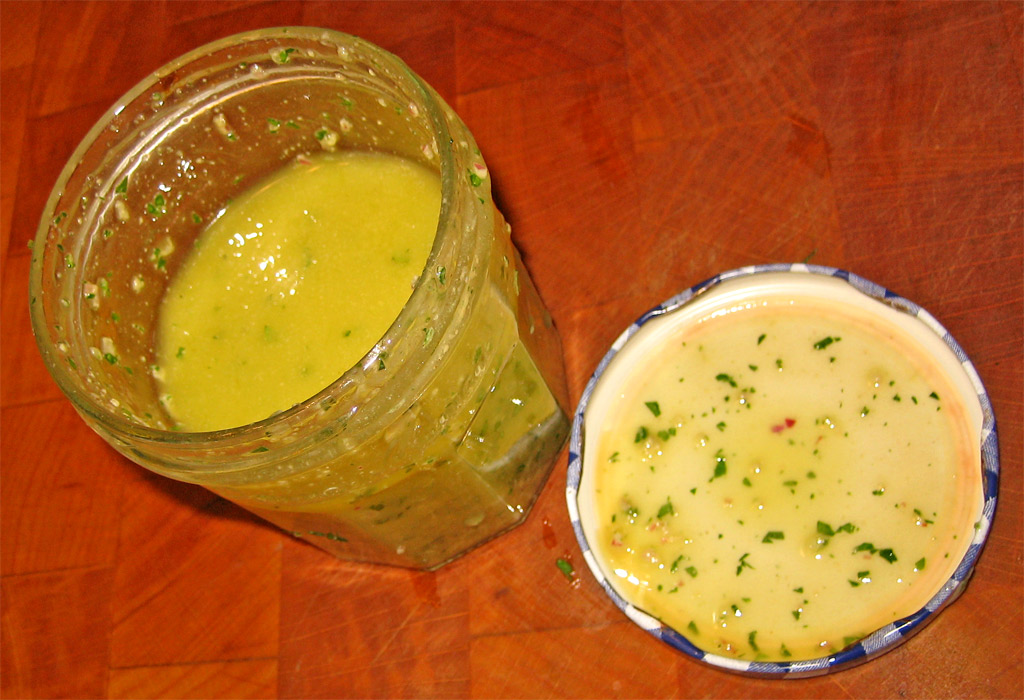
In a jar, add the oil, close the lid tightly and shake hard for about twenty seconds. In a bowl, whisk constantly while pouring the oil in a thin, steady stream. The dressing should look creamy and uniform. A homemade vinaigrette will eventually separate again as it sits; simply shake or whisk it just before using.
Step 3: Taste and adjust
Dip a salad leaf into the dressing and taste it. If it is too sharp, add a little more oil or a small drizzle of honey. If it tastes flat or oily, add a few drops of vinegar or a pinch more salt. Herbs should be added at this stage so their color and fragrance stay fresh.
Choosing oils and acids
Extra-virgin olive oil gives a fruity, peppery flavor and is ideal for Mediterranean salads. Neutral oils let other flavors shine, which works well for Asian-style dressings with soy sauce and ginger. A spoonful of toasted sesame or walnut oil adds a strong, nutty accent but can overpower in large amounts.
Red wine vinegar is bold and classic; white wine and champagne vinegars are gentler; cider vinegar is fruity; balsamic is sweet and dark; rice vinegar is mild. Lemon, lime and orange juice give a fresher flavor but lose their brightness after a day or two.
Ten easy variations
- Lemon herb: lemon juice, olive oil, Dijon, parsley and chives
- Balsamic: balsamic vinegar, olive oil, a little honey and garlic
- Honey mustard: cider vinegar, neutral oil, equal parts honey and grainy mustard
- Sesame ginger: rice vinegar, neutral oil, soy sauce, grated ginger and toasted sesame oil
- Citrus: orange juice with a splash of white wine vinegar and olive oil
- Maple cider: cider vinegar, olive oil, maple syrup and a pinch of cinnamon, great for fall salads
- Creamy tahini: lemon juice, tahini, water and garlic
- Miso: rice vinegar, white miso, neutral oil and a touch of honey
- Raspberry: mashed berries with red wine vinegar, olive oil and honey
- Shallot and thyme: red wine vinegar, minced shallot, olive oil and fresh thyme
Fixing a dressing that will not blend
If your vinaigrette separates right away, add another half teaspoon of mustard and shake or whisk again. Making sure the oil goes in gradually when whisking also helps. A small blender or immersion blender produces a very stable emulsion that holds for longer, useful when you are making a large batch for a party.
Store vinaigrette in a sealed jar in the fridge for up to 1 week, or 3 to 4 days if it contains fresh garlic, shallot, herbs or citrus juice. Olive oil can solidify when cold, so let the jar sit at room temperature for 15 minutes and shake well before using.
This guide is general kitchen information, not food-safety certification or medical advice. See our Disclaimer and Image Credits.