How to Boil Eggs: Soft, Jammy and Hard-Cooked
Boiled eggs are one of the most useful things to know how to make. A soft egg with a runny yolk is breakfast with toast; a jammy egg tops ramen, salads and grain bowls; a hard-cooked egg goes into lunch boxes, egg salad and snacks. The difference between them is only a few minutes.
This guide uses the hot-start method, where eggs go into water that is already boiling. It gives the most predictable timing and, in our experience, the easiest peeling. All times are for large eggs straight from the refrigerator.
What you need
A saucepan deep enough to cover the eggs by about an inch of water, a slotted spoon, a timer and a bowl of ice water. That is all. Use a pot wide enough that the eggs sit in a single layer; crowding drops the water temperature and makes timing less reliable.
Very fresh eggs, laid within a few days, are harder to peel because the membrane clings tightly to the white. Eggs that have been in the refrigerator for a week or more peel more easily, which is handy for planning.
The hot-start method
Bring the water to a full boil, then lower the heat so it is at a gentle boil. Use a slotted spoon to lower the cold eggs into the water one at a time so they do not crack against the bottom. Start the timer as soon as the last egg goes in. Keep the water at a steady, gentle bubble rather than a rolling boil, which knocks the eggs around.
When the time is up, lift the eggs out and put them straight into the ice water. Leave them for at least 5 minutes for soft and jammy eggs, and 10 minutes for hard-cooked. The ice bath stops the cooking so the yolks come out exactly as you intended.
Timing guide
- 6 minutes: soft-boiled. Set white, runny yolk. Best eaten warm from the shell with toast.
- 7 minutes: jammy. White fully set, yolk thick and glossy in the center. Great on ramen, salads and toast.
- 8–9 minutes: medium. Yolk mostly set with a slightly soft, fudgy center.
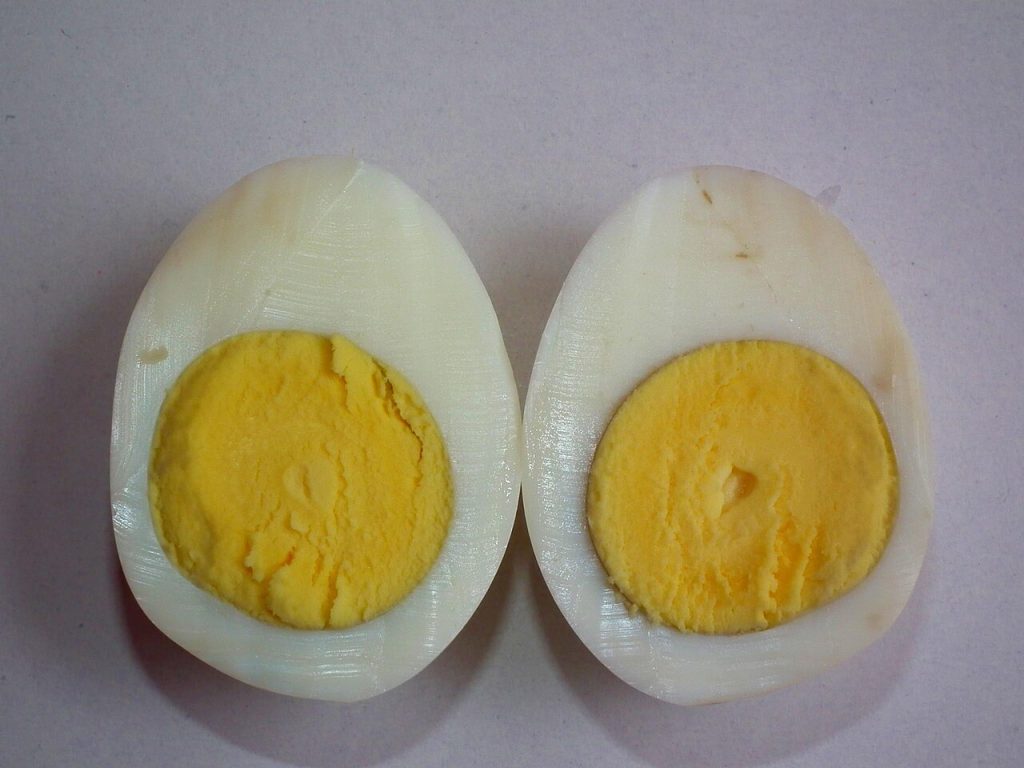
- 10–12 minutes: hard-cooked. Fully set yolk that is still bright yellow. Use 10 for tender, 12 for firm egg salad.
Extra-large eggs need about 30 seconds more; medium eggs about 30 seconds less. If your eggs are at room temperature, subtract about a minute. At high altitude, water boils at a lower temperature, so add a minute or two and test one egg first.
How to peel eggs cleanly
Peel the eggs once they are cool. Tap the wide end, where there is a small air pocket, on the counter, then gently roll the egg to crack the shell all over. Start peeling from the wide end, getting under the thin membrane, ideally under a trickle of water or in the bowl of water, which helps the shell slide away.
Soft-boiled eggs are delicate; set them in an egg cup, tap around the top with a spoon and lift off the cap rather than peeling.
Avoiding green yolks
A grey-green ring around a hard-cooked yolk is harmless. It is a reaction between iron in the yolk and sulfur in the white that happens when eggs are overcooked or cooled slowly. Following the timing and cooling the eggs promptly in ice water prevents it.
Storage and food safety
Hard-cooked eggs keep, in the shell, in the refrigerator for up to one week. Peeled eggs are best eaten within a few days; keep them in a sealed container. Do not leave cooked eggs at room temperature for more than two hours. Soft and jammy eggs are best eaten the same day, though jammy eggs can be marinated and refrigerated for a couple of days.
Once you have tried the timings with your own pot and stove, you can adjust by 30 seconds either way to get exactly the yolk you like. Write your favorite time down; it saves guessing next time.
This guide is general kitchen information, not food-safety certification or medical advice. See our Disclaimer and Image Credits.