Basic Knife Skills: How to Dice an Onion, Slice and Mince Safely
Most recipes start with chopping, and learning a few basic cuts makes cooking faster, safer and more even. You do not need a block of specialist knives; one sharp chef’s knife and a stable cutting board will handle nearly everything in this site’s recipes.
Take it slowly at first. Speed comes from repetition, while accuracy and safety come from good technique.
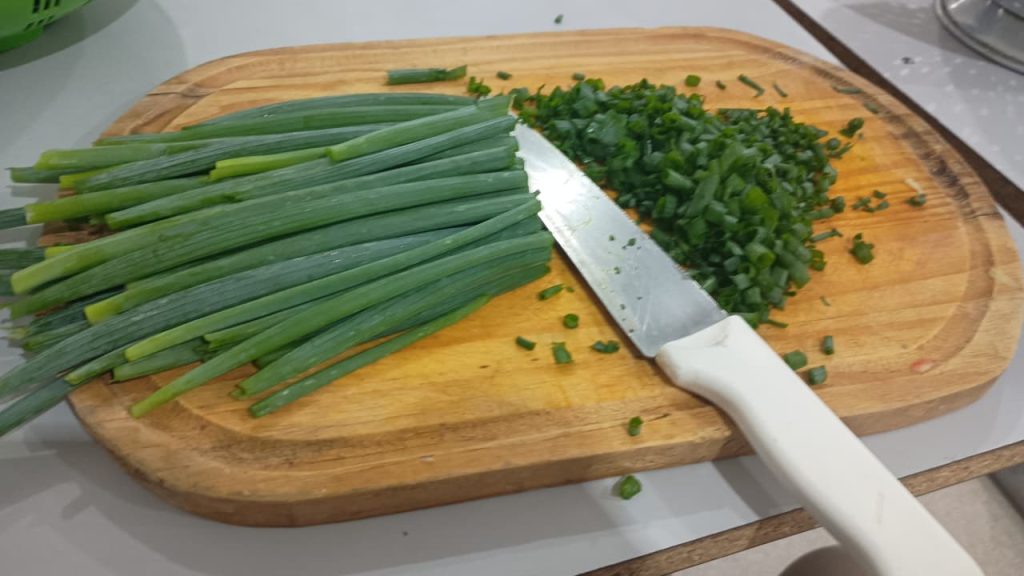
The tools that matter
A chef’s knife with an 8-inch (20 cm) blade suits most home cooks; a 6-inch blade is fine if your hands are smaller. Add a small paring knife for peeling and trimming, and a serrated knife for bread and ripe tomatoes.
Your cutting board should be large enough to hold what you are cutting with room to spare. Put a damp paper towel or thin cloth underneath to stop it sliding. Wood and plastic boards are both easy on knife edges; glass and stone dull them quickly.
Keep the knife sharp. A dull blade needs more force and is more likely to slip off a vegetable’s skin. Use a honing steel regularly and have the knife sharpened when honing no longer helps.
How to hold the knife and the food
Grip the handle with your middle, ring and little fingers, and pinch the base of the blade between your thumb and the side of your index finger. This pinch grip gives far more control than holding only the handle.
With your other hand, use the claw grip: curl your fingertips under, so your knuckles face the blade and your thumb sits behind your fingers. The flat side of the knife rests lightly against your knuckles, which act as a guide. Move the claw back as you cut.
Make it stable first
Round foods roll, and rolling is where accidents happen. Before you start slicing, cut a thin strip off one side of a carrot, potato or onion to create a flat base, then turn it onto that flat side. This one habit makes almost every cut safer.
Slicing and cutting sticks
Slicing is a smooth forward-and-down motion, letting the tip stay near the board while the heel of the knife rises and falls. Do not just push straight down.
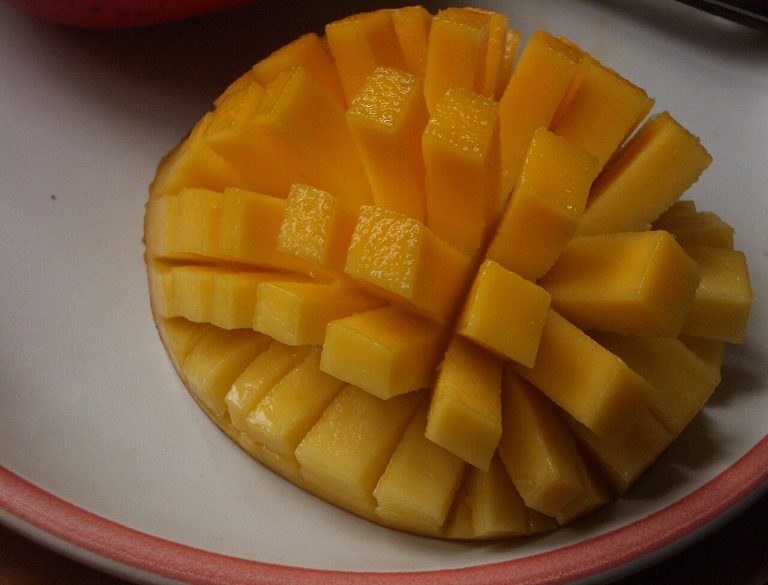
To cut sticks (batons), slice a vegetable into planks of the thickness you want, stack two or three planks, and slice them lengthwise into sticks. Turn a bundle of sticks crosswise and cut again to get even cubes, the basis of a dice.
How to dice an onion
- Cut the onion in half from the root to the tip. Leave the root end intact; it holds the layers together.
- Peel off the skin and lay each half cut side down.
- Make vertical cuts from near the root toward the tip, spaced as wide as you want your dice, without cutting through the root.
- Optionally, make one or two horizontal cuts toward the root, keeping your palm flat on top.
- Now slice across the cuts, from tip toward root, and the onion falls into dice. Discard the root.
A sharp knife crushes fewer cells and releases fewer of the compounds that make your eyes sting. Chilling the onion for 15 minutes also helps.
Choosing cuts for recipes
Recipes use a handful of standard terms. A large dice is about 3/4 inch, a medium dice about 1/2 inch, and a small dice about 1/4 inch. Mince means as fine as you can reasonably cut. Julienne is thin matchsticks, and a chiffonade is the thin ribbons used for basil.
The size matters because it controls cooking time. Pieces of the same size cook at the same rate, so a soup with evenly diced vegetables will be uniformly tender, while a mix of chunks and slivers will have some mushy pieces and some hard ones.
Mincing garlic and herbs
To peel garlic, press a clove under the flat of the knife until the skin cracks. Slice it thinly, then rock the knife back and forth over the pile, holding the tip down with your other hand, and gather the pieces with the blade until they are fine.
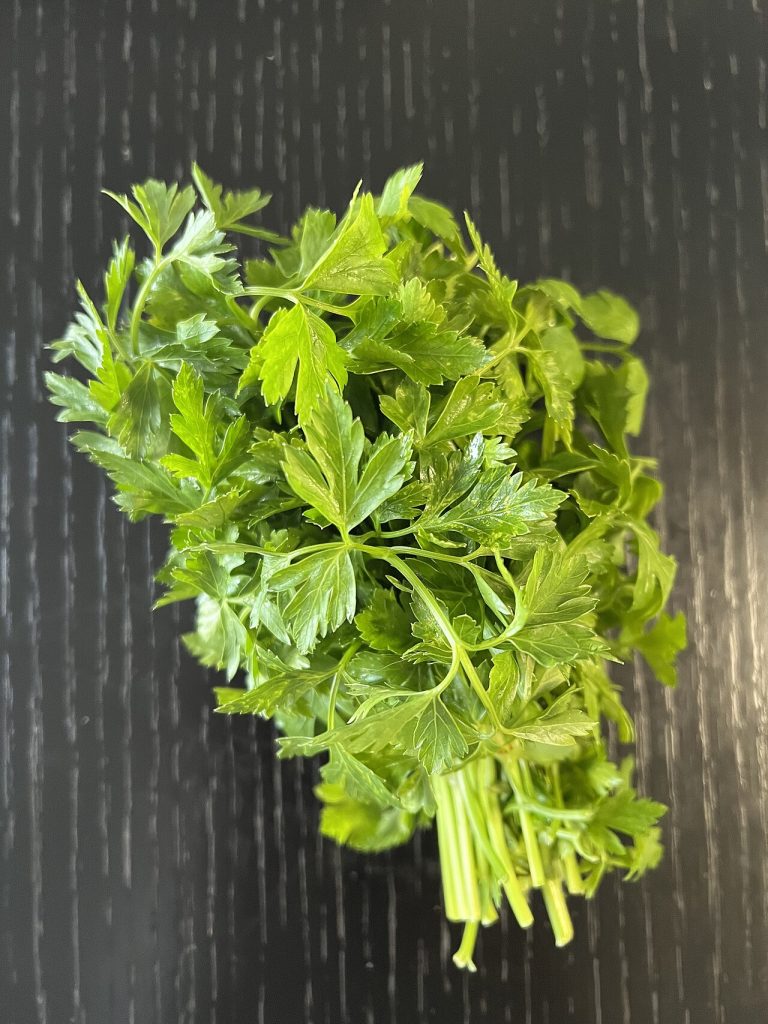
For leafy herbs like parsley and cilantro, dry them well, bunch the leaves tightly and slice across, then rock-chop briefly. For basil and mint, stack the leaves, roll them into a cigar and slice thinly to make ribbons, which bruises them less.
A few safety habits
- Never try to catch a falling knife; step back and let it drop.
- Wash knives separately rather than leaving them in a sink of soapy water.
- Carry a knife with the tip pointing down and the blade facing behind you.
- Push chopped food off the board with the spine of the knife, not the edge, to keep it sharp.
Practice these cuts on inexpensive vegetables like onions and carrots, and use the results in a soup or stir-fry. Within a few weeks of everyday cooking, they will feel natural.
This guide is general kitchen information, not food-safety certification or medical advice. See our Disclaimer and Image Credits.