Classic Greek Village Salad (Horiatiki)
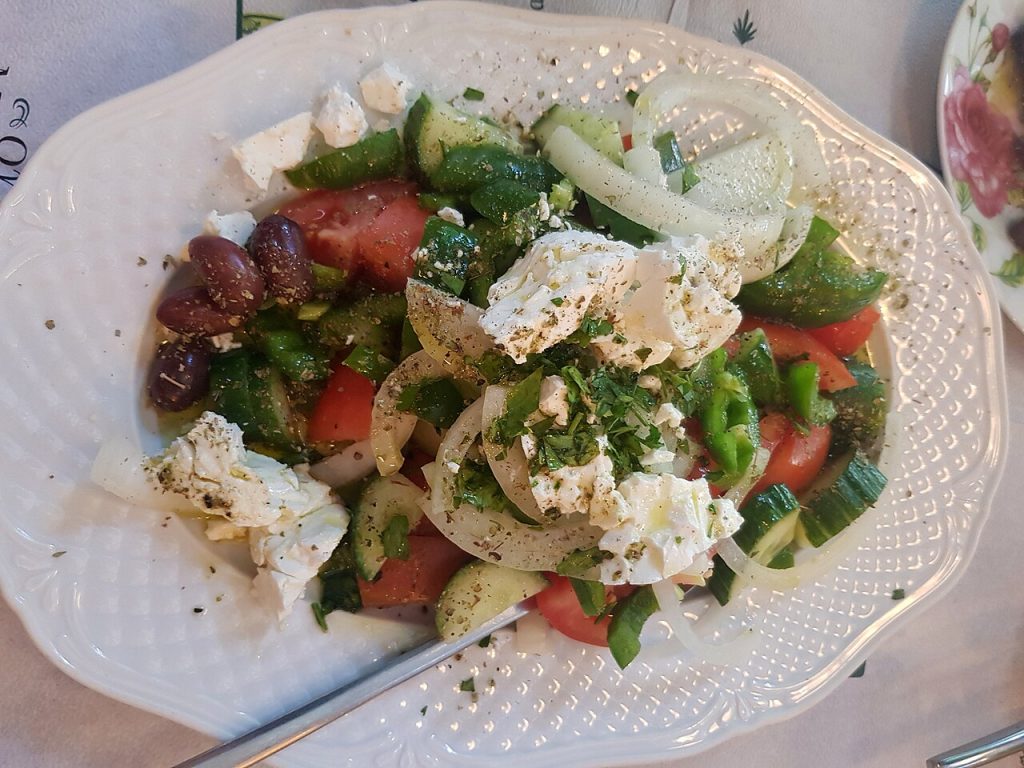
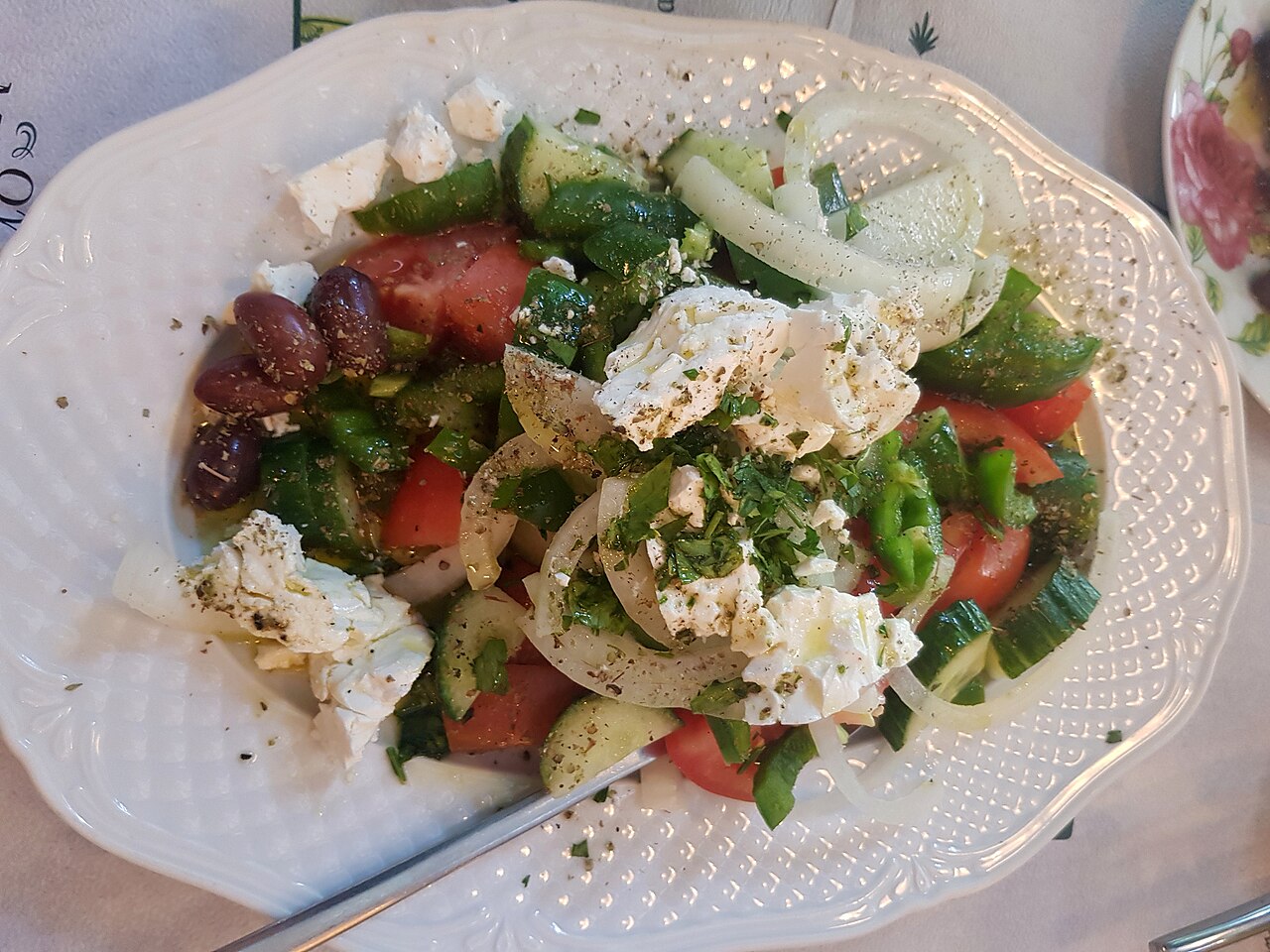
A real Greek village salad has no lettuce. It is a bowl of ripe tomatoes, cucumber, green pepper and red onion, finished with a slab of feta, a handful of olives, dried oregano and a generous pour of olive oil. There is no measured dressing, because the juices from the tomatoes mix with the oil and a splash of vinegar at the bottom of the bowl to make one. That pool of liquid is the best part, and the reason to keep a piece of crusty bread nearby.
Because the ingredient list is so short, the salad depends entirely on what you buy. Late-summer tomatoes and crisp, thin-skinned cucumbers make it extraordinary. In the colder months, cherry or grape tomatoes are usually the most flavorful option at the store, and they work well here if you halve them.
Why the feta goes on whole
In Greece the feta usually arrives as one thick slab resting on top, and each person breaks off pieces with a fork. Crumbled feta disappears into the salad and turns the juices cloudy and salty. A whole piece stays creamy in the center and lets everyone decide how much cheese goes with each bite.
Look for feta sold in brine, ideally made from sheep’s milk or a sheep and goat blend. It is softer and tangier than the dry, pre-crumbled kind, which is often made from cow’s milk and can taste flat. Keep any leftover cheese submerged in its brine and it will last for weeks.
Cutting the vegetables
Rustic is the goal. Tomatoes cut into wedges of slightly different sizes hold their juice better than small dice, and chunky cucumber pieces stay crisp longer. A sharp serrated knife makes tomato wedges easy without squashing them.
Slice the onion and pepper thin, though. Their flavors are stronger, and thin rings spread through the bowl so you get a little in each forkful instead of one overpowering chunk.
What to serve it with
This salad sits happily next to almost anything from the grill: chicken skewers, lamb chops, grilled fish or halloumi. It also makes a light lunch on its own with warm pita and a spoonful of hummus or tzatziki.
For a bigger meal, add a can of drained chickpeas or a few handfuls of cooked orzo. The pasta soaks up the juices and turns the salad into something that holds well in a lunch container.
A note on olive oil
Since the oil is part of the dressing and poured over the cheese, use one you enjoy tasting on its own. A fruity, slightly peppery extra-virgin oil is ideal. Store it away from the stove and out of the light so it stays fresh.
Classic Greek Village Salad (Horiatiki)
Ingredients
Method
- Cut the tomatoes into irregular wedges, removing the tough core. Put them in a wide, shallow bowl and sprinkle with the salt.
- Halve the cucumber lengthwise and cut it into thick half-moons. If the skin is waxy, peel it in stripes first.
- Seed the pepper and slice it into thin rings. Slice the onion as thinly as you can and separate the layers.
- Add the cucumber, pepper, onion, olives and capers to the tomatoes and toss gently with your hands.
- Drizzle with the vinegar and most of the olive oil and toss once more. Let the salad sit for 5 minutes so the tomatoes start to release their juices.
- Lay the block of feta on top, sprinkle with the oregano, drizzle the rest of the oil over the cheese and serve with bread.
Notes
- Salt the tomatoes first; it draws out juice that becomes the dressing.
- If raw onion is too sharp for you, soak the slices in cold water for 10 minutes and pat dry.
Storing and reheating
Village salad is best eaten within an hour of making it. If you need to prepare it ahead, cut the vegetables and keep them in a covered container in the fridge, with the feta, oil and vinegar stored separately, for up to a day. Combine just before serving. Leftovers keep for a day but the cucumber will soften.
Substitutions
- Use a few spoonfuls of crumbled goat cheese if you cannot find good feta.
- Swap the green pepper for a yellow or orange bell pepper for a sweeter salad.
- Add a few torn mint or parsley leaves for a fresh, herbal note.
- For a vegan version, leave out the feta and add extra olives and chickpeas.
Common questions
Is there lettuce in a Greek salad?
Not in the traditional village version. Salads with romaine and feta are common in restaurants abroad, but the classic horiatiki is just tomatoes, cucumber, pepper, onion, olives and feta.
Do I need lemon juice?
Red wine vinegar is more typical, but a squeeze of lemon works well, especially if your tomatoes are not very acidic.
Why does my salad taste bland?
Usually it needs more salt or riper tomatoes. Taste the juices at the bottom of the bowl after it rests and season again.
This recipe is for general cooking information only and is not medical or nutrition advice. See our Disclaimer and Image Credits.