Herb-Roasted Turkey Breast with Garlic Butter
A bone-in turkey breast is the easiest way to serve turkey for a smaller holiday gathering or a Sunday dinner. It roasts in under two hours, carves neatly and has plenty of the white meat most people want. Rubbing herb and garlic butter under the skin seasons the meat directly and helps the skin turn golden and crisp.
The secret to juicy turkey breast is not a special technique but a thermometer. White meat dries out quickly once it passes 165°F (74°C), so taking it out of the oven at the right moment and letting it rest is what makes it tender.
Thawing a frozen turkey breast safely
Thaw turkey in the refrigerator, never on the counter. Allow about 24 hours for every 4 to 5 pounds, so a 6- or 7-pound breast needs about a day and a half. If you are short on time, submerge the wrapped breast in cold water in the sink, changing the water every 30 minutes; allow about 30 minutes per pound and cook it right away.
How to carve a turkey breast
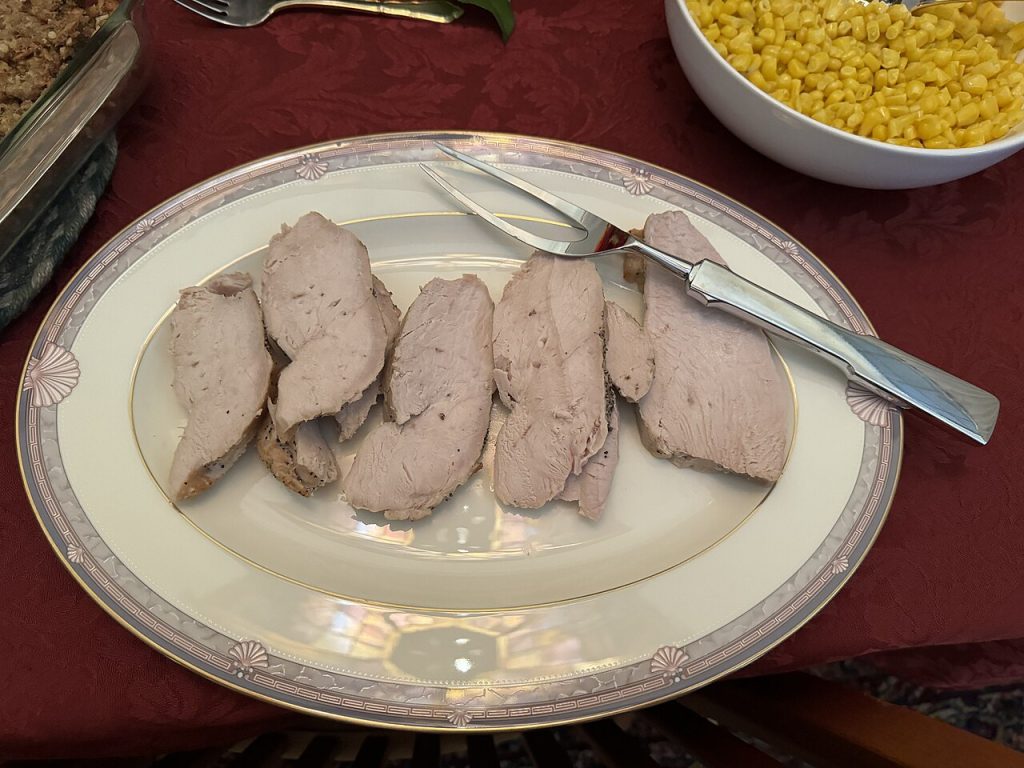
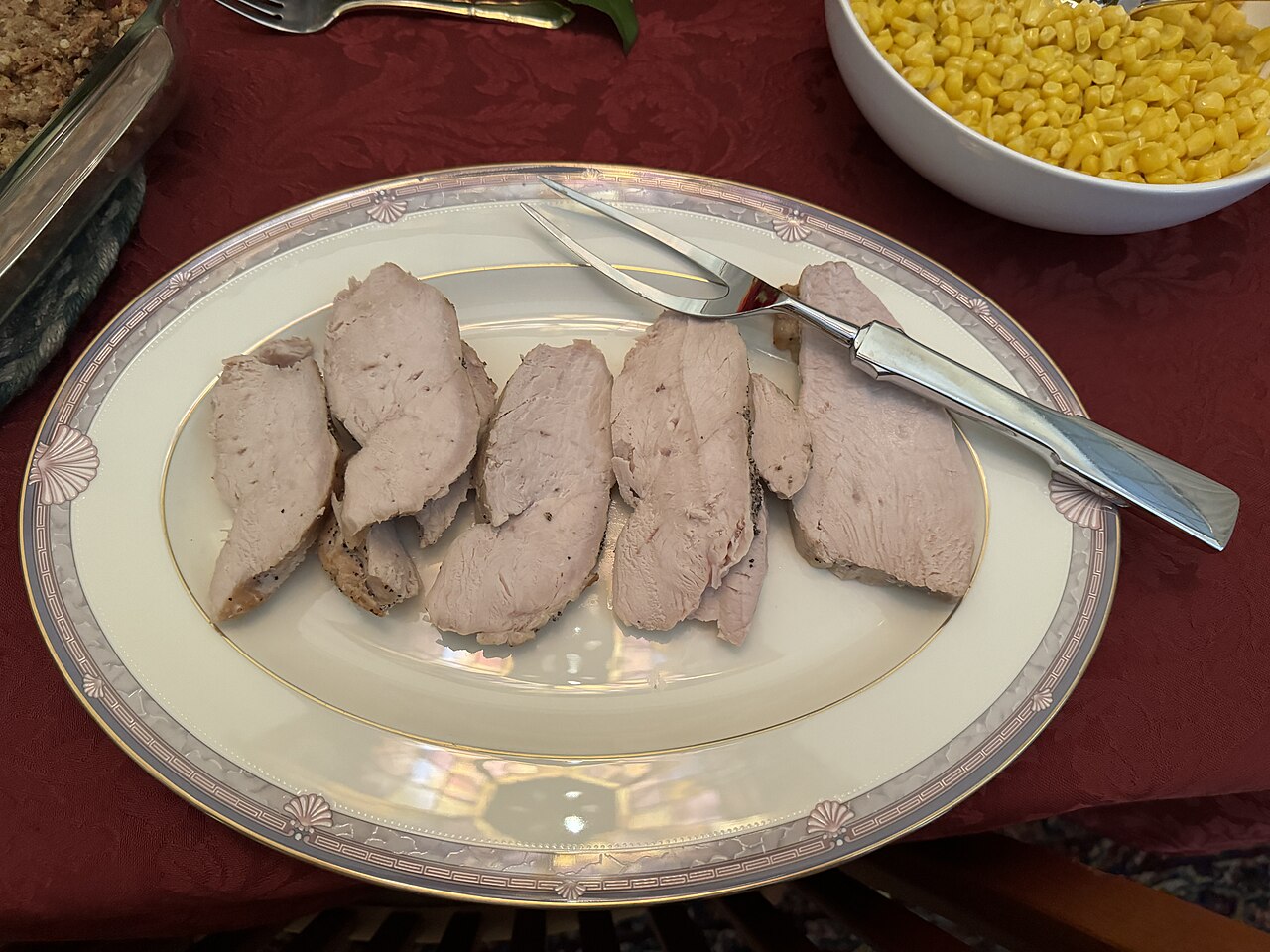
Let the turkey rest so the juices settle. Then run a sharp knife along one side of the breastbone, keeping the blade close to the rib cage, and gently pull the meat away in a single piece. Repeat on the other side. Lay each half flat and slice across the grain into thick slices. Carving the whole lobe off the bone first gives neater slices than slicing directly on the frame.
Roasting times by size
As a rough guide, a bone-in breast takes about 20 minutes per pound at 350°F (175°C) after the initial high-heat blast. A boneless turkey breast roast of 3 pounds will need about an hour. Ovens vary, so start checking the temperature early. The pop-up timers included with some turkeys are not reliable; use an instant-read thermometer.
Herb-Roasted Turkey Breast with Garlic Butter
Ingredients
Method
- Remove the turkey from the refrigerator 45 minutes before roasting. Heat the oven to 425°F (220°C). Pat the turkey very dry with paper towels.
- Mash the butter with the garlic, sage, rosemary, thyme, lemon zest, salt and pepper.
- Gently loosen the skin over the breast with your fingers, without tearing it. Spread about two thirds of the butter under the skin, directly on the meat, and rub the rest over the outside.
- Scatter the onion and carrots in a roasting pan and pour in the broth. Set the turkey on top, skin side up.
- Roast for 20 minutes, then lower the oven to 350°F (175°C). Continue roasting for 60–80 minutes more, basting once or twice with the pan juices, until a thermometer in the thickest part (not touching bone) reads 160–165°F (71–74°C). Tent loosely with foil if the skin browns too quickly.
- Transfer to a cutting board and rest for 20 minutes; the temperature will rise to at least 165°F (74°C). Carve and serve with the pan juices or gravy.
Notes
- Dry skin browns better; pat it thoroughly and, if you have time, leave the turkey uncovered in the fridge overnight.
- Save the pan drippings and vegetables to make gravy.
Storing and reheating
Refrigerate carved turkey within 2 hours in shallow covered containers for up to 4 days, or freeze for up to 3 months. Reheat slices covered with a spoonful of broth so they stay moist.
Substitutions
- Use olive oil instead of butter for a dairy-free version.
- Swap the herbs for 1 tablespoon of a dried poultry seasoning blend.
- Use a boneless turkey breast roast; start checking the temperature after 50 minutes.
- Add halved shallots and garlic cloves to the roasting pan.
Common questions
What temperature should turkey breast reach?
The U.S. Department of Agriculture recommends cooking poultry to 165°F (74°C). Many cooks remove it at 160°F and let carryover heat during resting bring it up.
Should I brine it?
A dry brine (salting the breast and refrigerating uncovered for 12–24 hours) seasons it well. If you do, reduce the salt in the butter.
Can I cook it from frozen?
Yes, but it takes about 50 percent longer, and you cannot put the butter under the skin until it thaws enough to loosen it.
This recipe is for general cooking information only and is not medical or nutrition advice. See our Disclaimer and Image Credits.